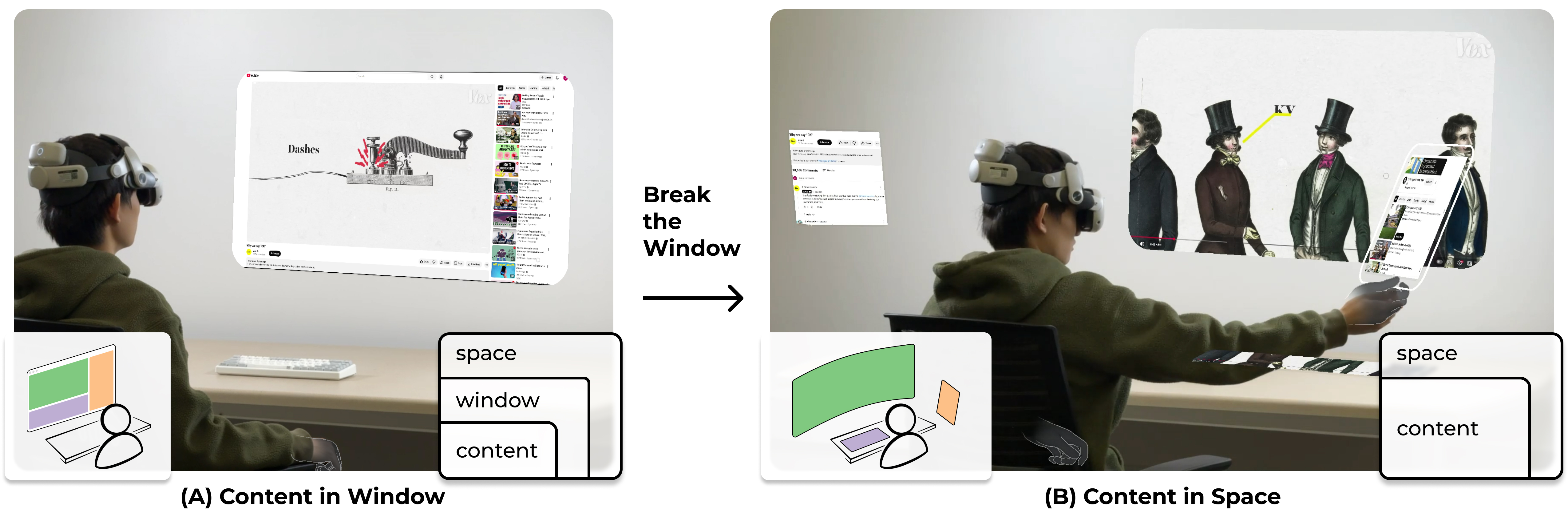
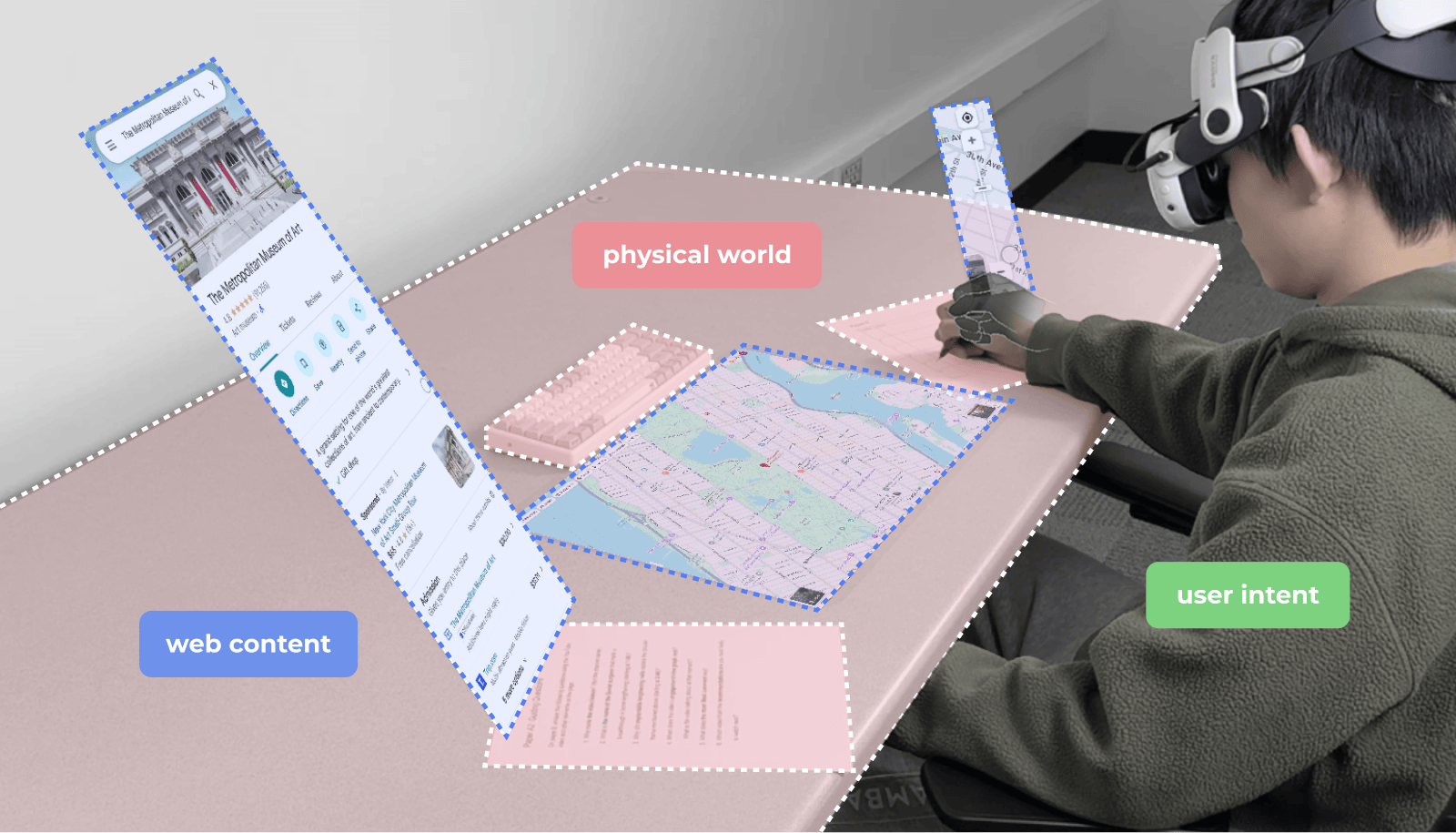
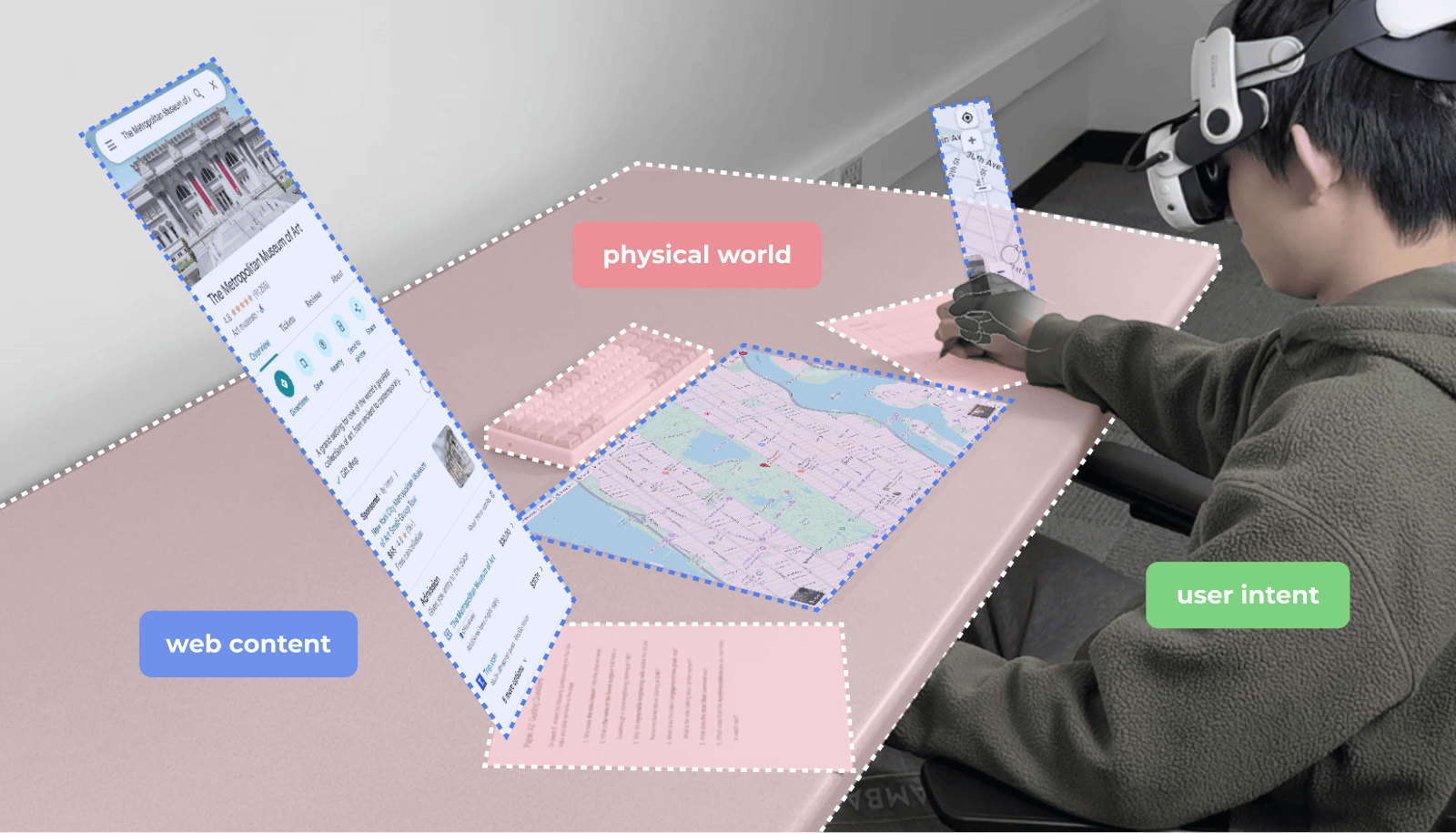
BTW rethinks XR web experiences by
breaking the window and decomposing webpages into
spatially distributed UI chunks, shifting from a
content → window → space hierarchy to a
content → space design that enables direct engagement
with web information through spatial organization and embodied
interaction.
System Overview
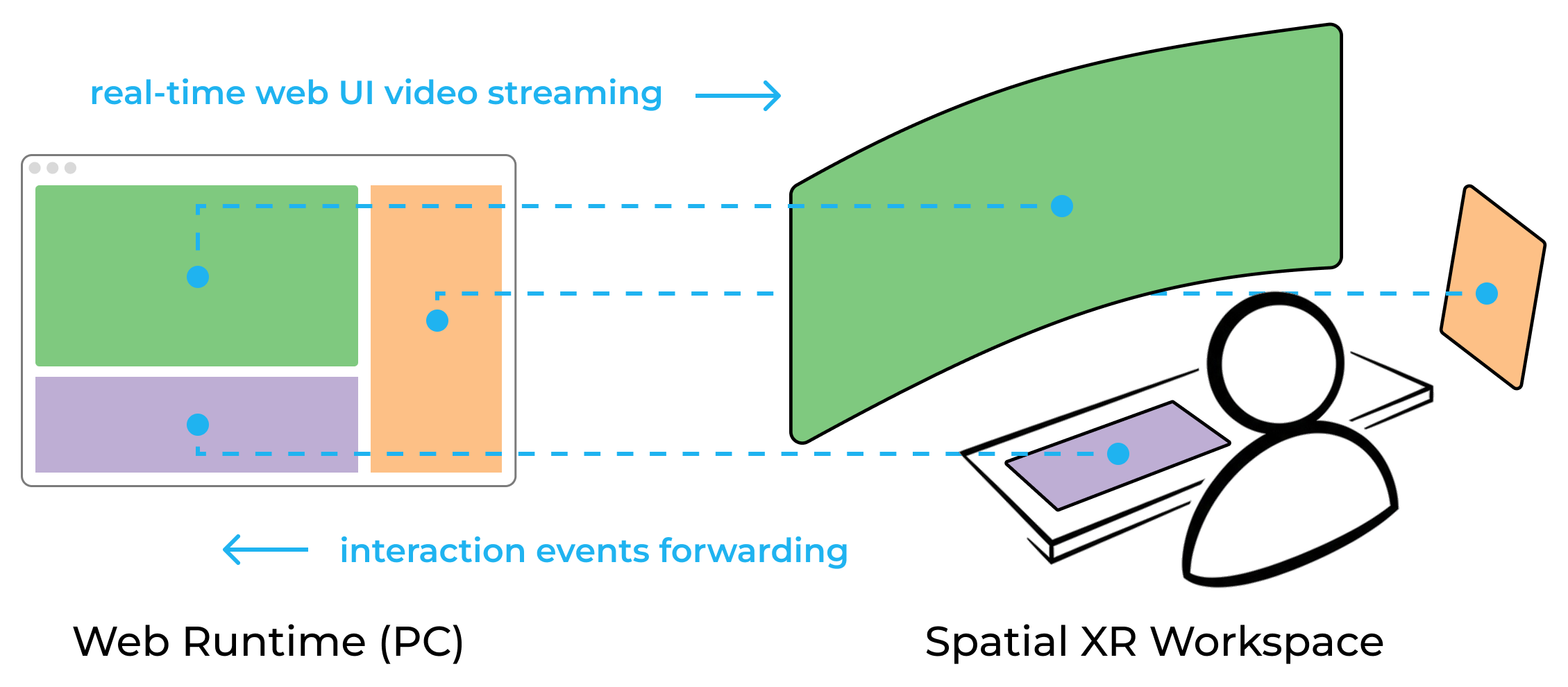
A live webpage is rendered in a standard browser and
streamed into XR as multiple spatial panels, while
user interactions in XR are forwarded back to the
original webpage in real time.
User Study
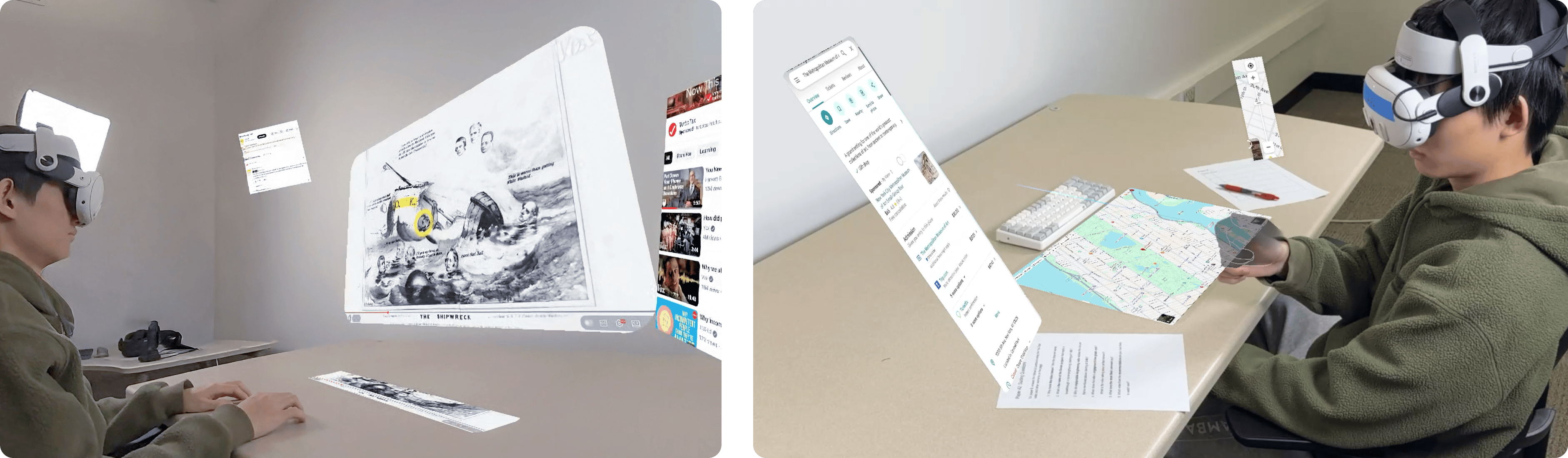
User study setup
User study demo video
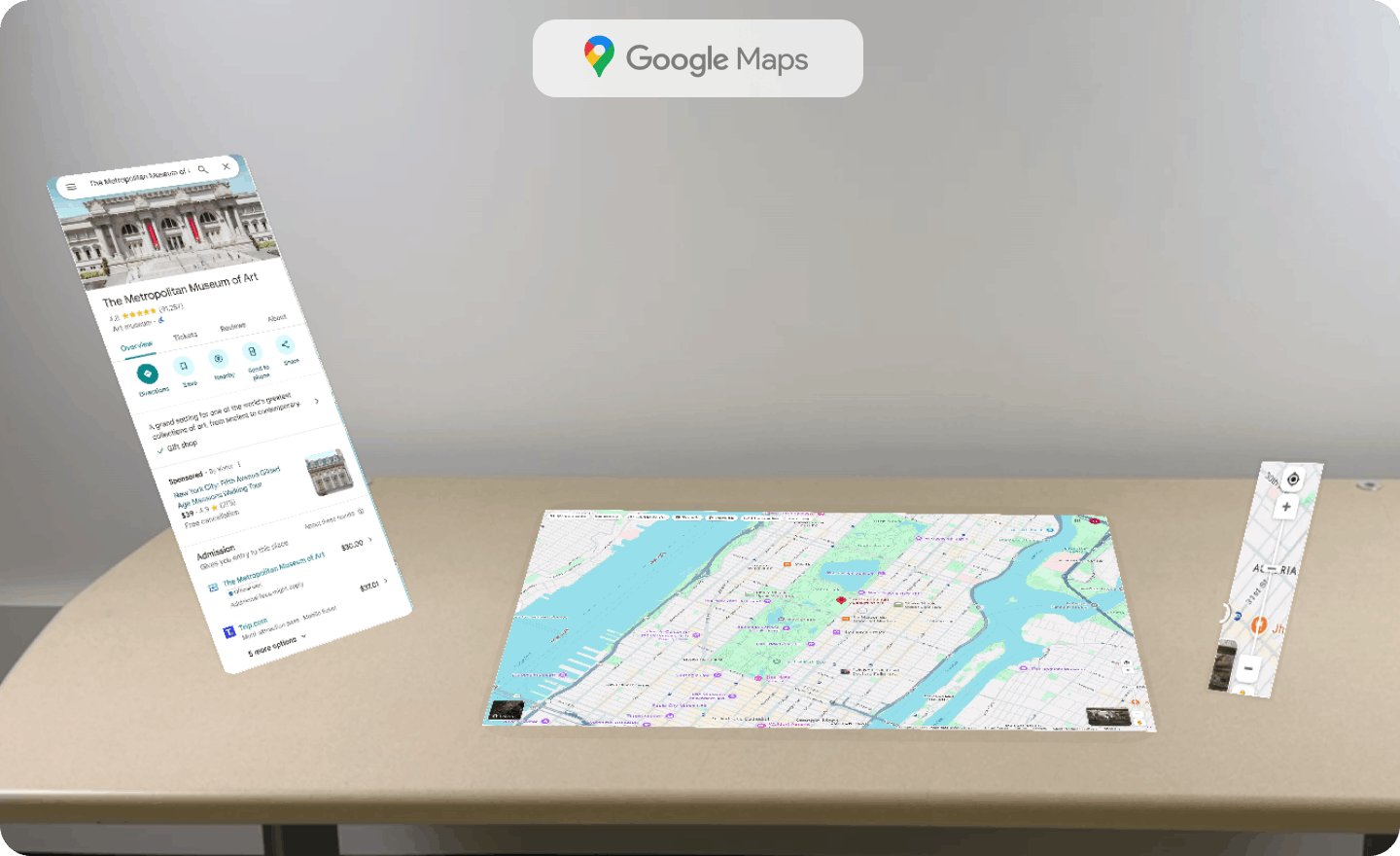
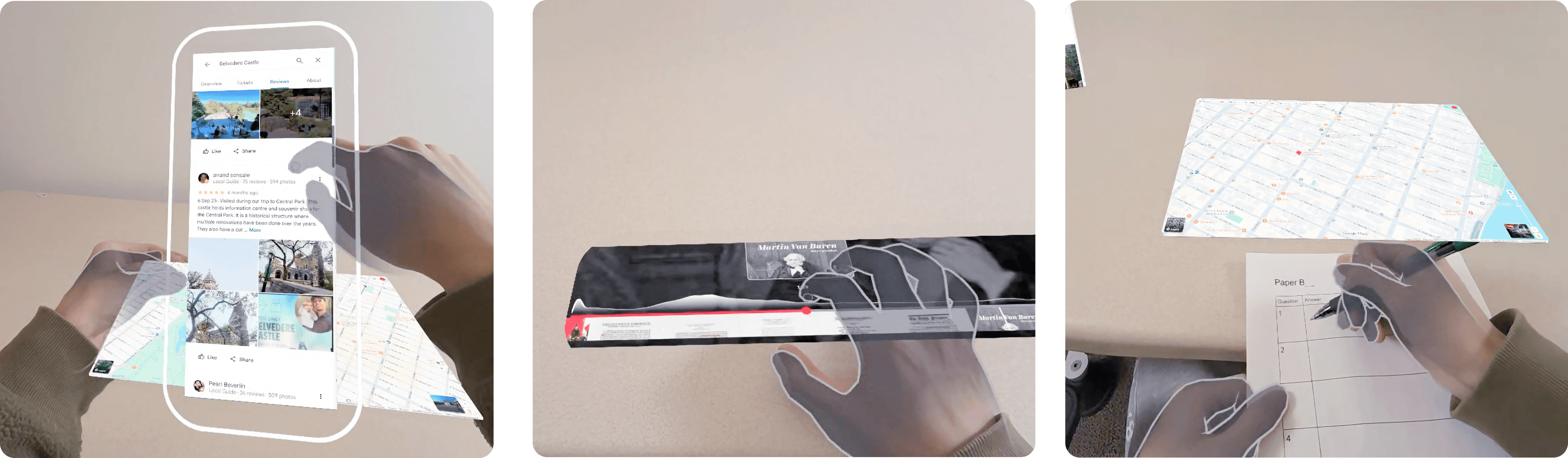
Google Maps setup
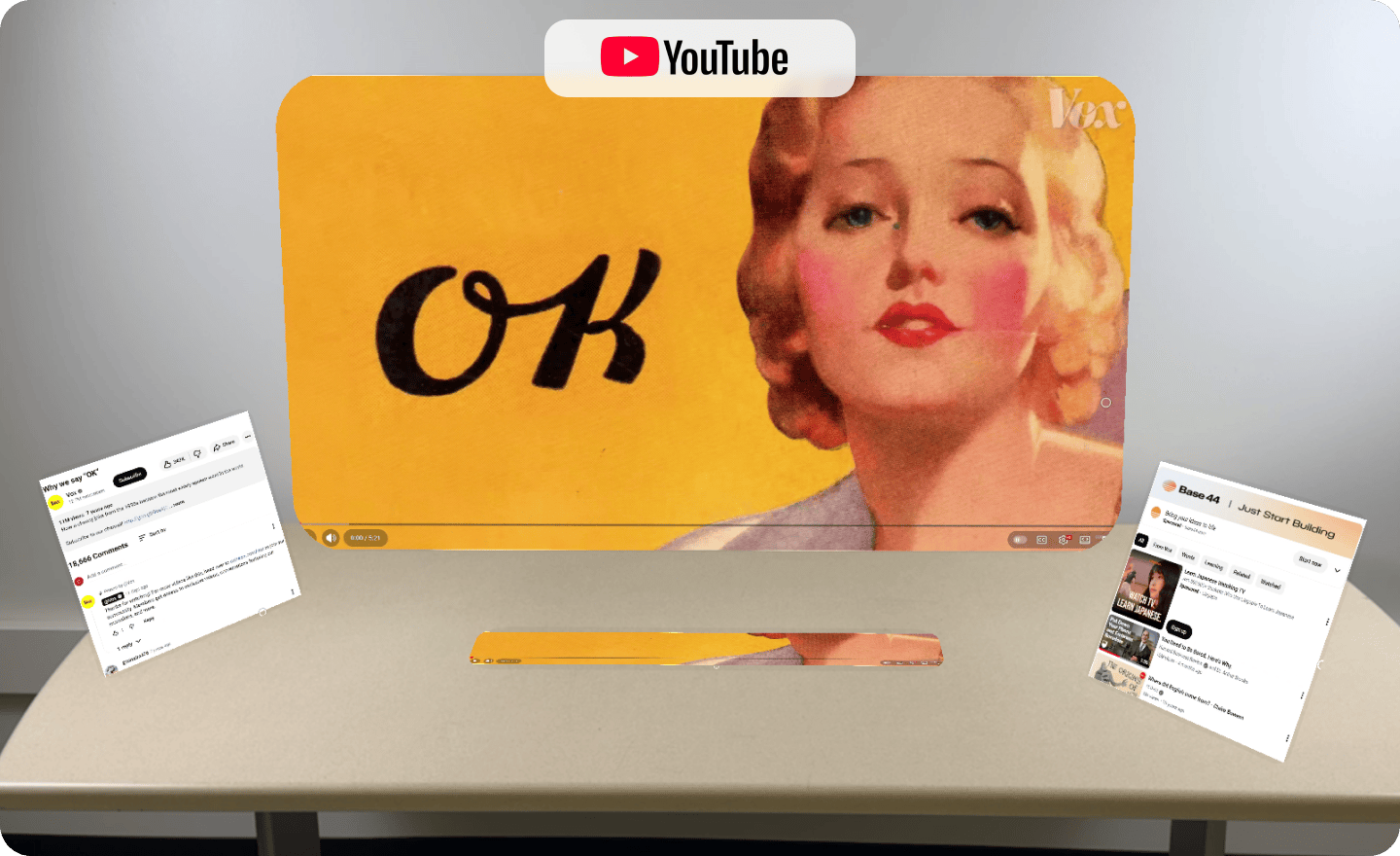
YouTube setup
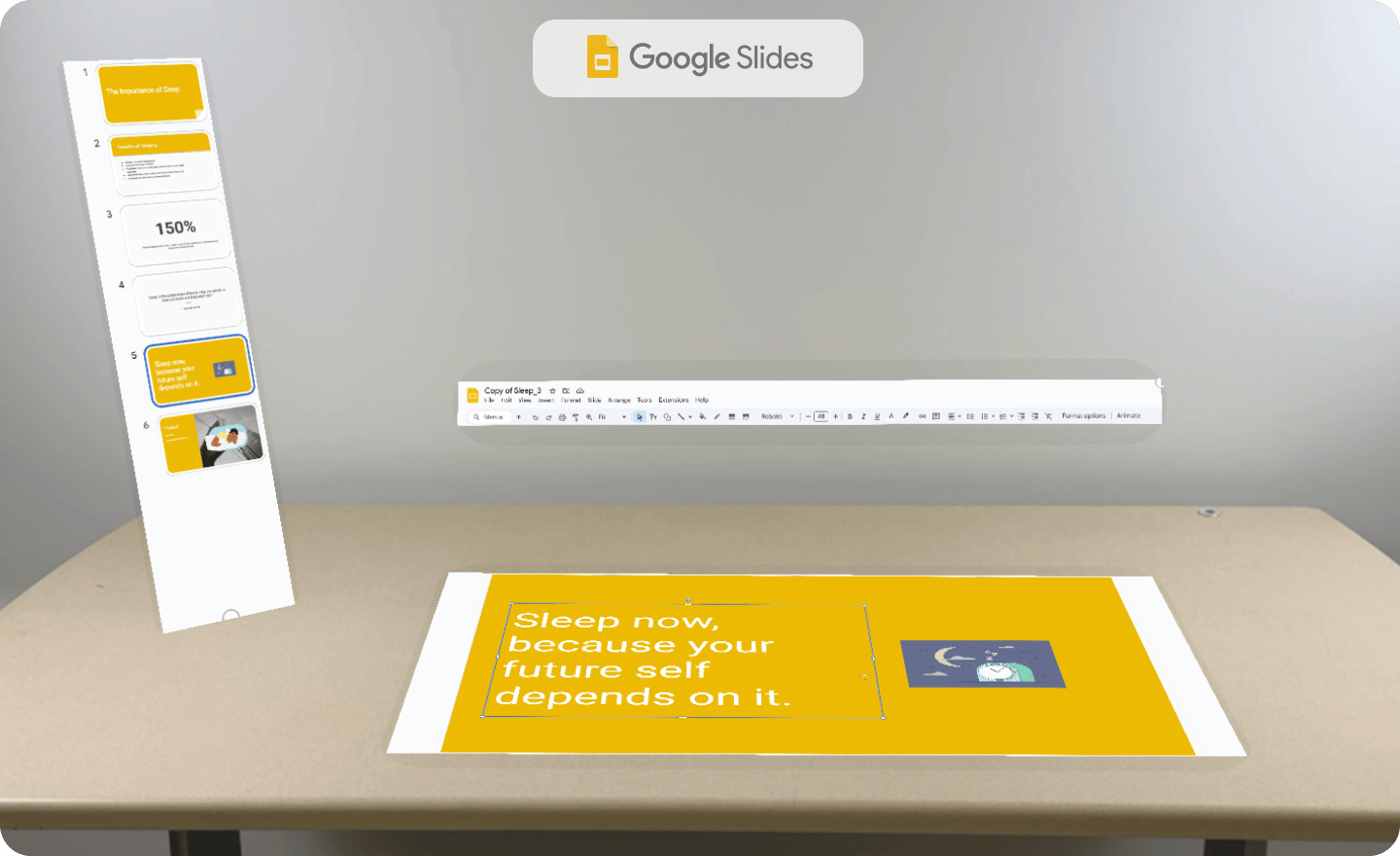
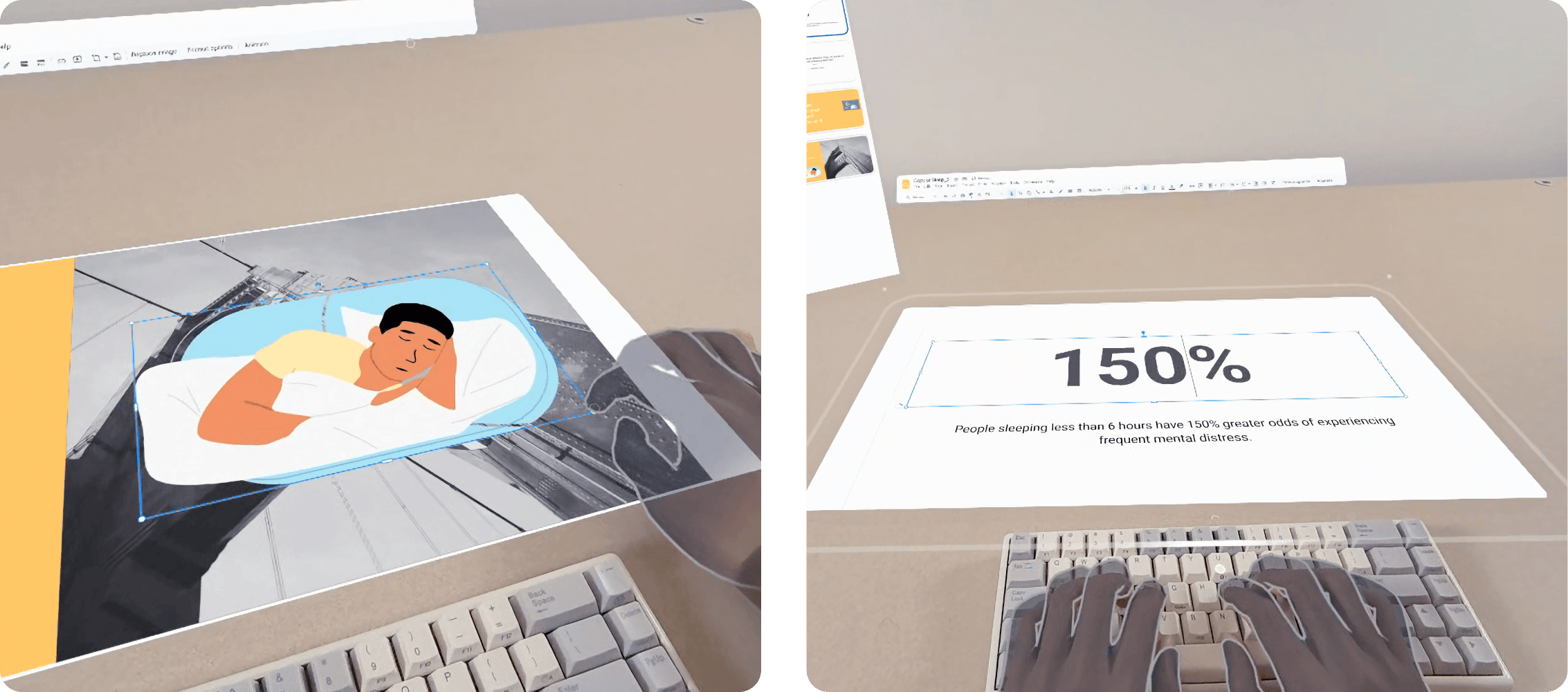
Slides setup
Findings
Figure 5-a
Finding 1: Attention and interaction become
distributed in space. While this allows for simultaneous
content viewing, it increases coordination costs and
physical fatigue due to the effort required to manage
distant or off-center panels.
Figure 5-bc
Finding 2: Space becomes a semantic substrate. Over
time, participants formed location-function bindings, using
spatial memory to retrieve information. However,
misplacement proved costly: panels that appeared too
near/far, or frequently moved disrupted expectations and led
to hesitation.
Figure 5-def
Finding 3: Physical anchoring both stabilizes and
complicates interaction. Anchoring virtual content to real
surfaces improved perceived control and precision.
Unfortunately, this introduced conflicts where virtual
panels occlude physical objects and writing gestures are
mistakenly interpreted as inputs.
Figure 5-gh
Finding 4: Immersion-driven engagement does not imply
productivity. BTW was widely described as novel and
engaging, particularly for exploratory and visual scenarios
such as browsing and media consumption. However,
participants did not consistently feel faster or more
efficient
Finding 5: Spatial web browsing lacks a shared UI
grammar. Across websites, participants improvised their own
layout rules but repeatedly noted the absence of conventions
(e.g., “no rule for where things should go”).
Acknowledgments
This material is based upon work supported in part by the
National Science Foundation under Grant No. IIS-2441310.
BibTeX
   @inproceedings{zhang2026break,
      title={Break the Window: Exploring Spatial Decomposition of Webpages in XR},
      author={Zhang, Chenyang and Wei, Tianjian and Yang, Haoyang and Gonzalez-Franco, Mar and Yang, Yalong and Gonzalez, Eric J},
      booktitle={Proceedings of the Extended Abstracts of the 2026 CHI Conference on Human Factors in Computing Systems},
      pages={1--6},
      year={2026}}